
Making a difference in Morocco | Redmaids' High School
Date Posted: 5 November, 2019
READ MORE
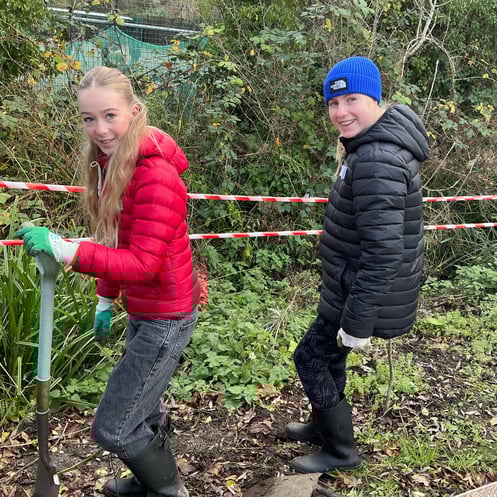 This term has been an inspiring one for our Eco Reps and Environmental Captains, who have been busy driving sustainability projects across the school. Students have attended two sustainability conferences, returning with fresh ideas and renewed motivation to make meaningful change within our community.
Working alongside Mrs Turner, the team has begun mapping the school grounds as part of an ambitious biodiversity monitoring project. Despite the challenges of winter weather, students have already started measuring key trees for our new Talking Trees initiative. Meanwhile, the Environmental Captains have launched a uniform upcycling club, transforming pre-loved uniform items into pencil cases and giving old materials a new life. In the garden, garlic and onions have been planted, and new recycling bins have been installed in the Redland Foyer to support more sustainable habits across the school.
 All of this work reflects the commitment and passion of our students. Their efforts raise an important question: while we are making local change here at Redmaids’ High, how are people across the country inspired to adjust their own behaviours and perspectives on environmental issues?
One powerful answer lies in The Big Doc — the large-scale natural history documentaries that have shaped public understanding of the planet. From Planet Earth and Frozen Planet to Ocean, these programmes have brought environmental challenges into millions of homes.
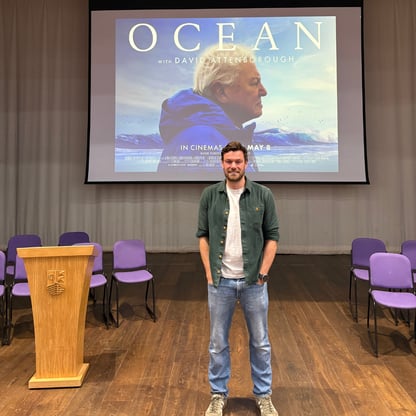
This week, we were fortunate to welcome someone who knows this world first-hand: wildlife cameraman Olly Scholey, whose work includes filming Ocean with Silverback Films here in Bristol, the global hub of natural history production.
During a fascinating talk, Olly shared insights into the routes that can lead into natural history filmmaking and the realities of working on major documentaries. Students watched powerful clips from Ocean exploring topics such as the devastating effects of bottom trawling on the seabed and the significance of the oceans as a food source for around 3 billion people worldwide. Olly also discussed climate change, plastic pollution, and the urgent need to protect marine environments — while emphasising that with conservation efforts and time, recovery is possible.
The talk ended on a hopeful note, sparking thoughtful questions from students about career pathways, environmental ethics, and the personal lessons nature has taught him. Many stayed behind to speak with Olly individually, seeking further advice and insight.
Days later, the impact of the assembly is still resonating around the school. Our Eco Reps continue to demonstrate how local action, combined with inspiration from global storytellers like Olly, can empower young people to protect the planet — one project, one idea, and one conversation at a time.
To read about our sustainability efforts, click HERE.